
Vapor barrier installation in Columbia costs $1,500–$4,000 for a proper Class I system — reinforced liner across all ground, taped seams, wrapped piers, sealed edges. It's the stage that silences the soil's vapor contribution, and the one most often faked with a thin sheet and staples.
What the ground contributes, what a real install includes, and how to spot the staple-job on any bid.
What Midlands ground sends up
Even dry-looking soil moves water as vapor — continuously, upward, into your crawl. Columbia's mix makes it interesting: clay-side lots hold storm moisture and exhale it for days; sandhills-transition lots drain liquid fast but breathe vapor generously year-round. Either way the soil is a humidifier running under your house, and no amount of dehumidification should be asked to outpump an open floor of earth. The barrier is the economy play: stop the source, and every other stage shrinks.
A real install, itemized
- Class I reinforced liner — the permeance rating that actually stops vapor, in material that survives service traffic
- Full coverage — every square foot of ground, run up walls to the sealed edge
- Seams overlapped and taped — a pressure boundary, not a patchwork
- Piers wrapped — each one, sealed, because unwrapped piers are chimneys through the system
- Photographed handover — you see the finished boundary before we leave it
| Install | Cost | Performance over Midlands ground |
|---|---|---|
| Class I, sealed properly | $1,500–$4,000 | Soil contribution effectively silenced for decades |
| Thin sheet, stapled | Less, briefly | Breathes at every seam; torn by the first service visit |
The barrier in the bigger system
Stage one silences the ground; the rest of the system answers the air and the water: mechanical drying for Columbia's saturated months, drainage where clay-side storm water intrudes, the full seal when the readings call for the complete engine-off. The free photographed inspection reads which stages your numbers actually order — and a properly quoted barrier never pretends to be the whole answer when it isn't.
Barrier work on clay that breathes
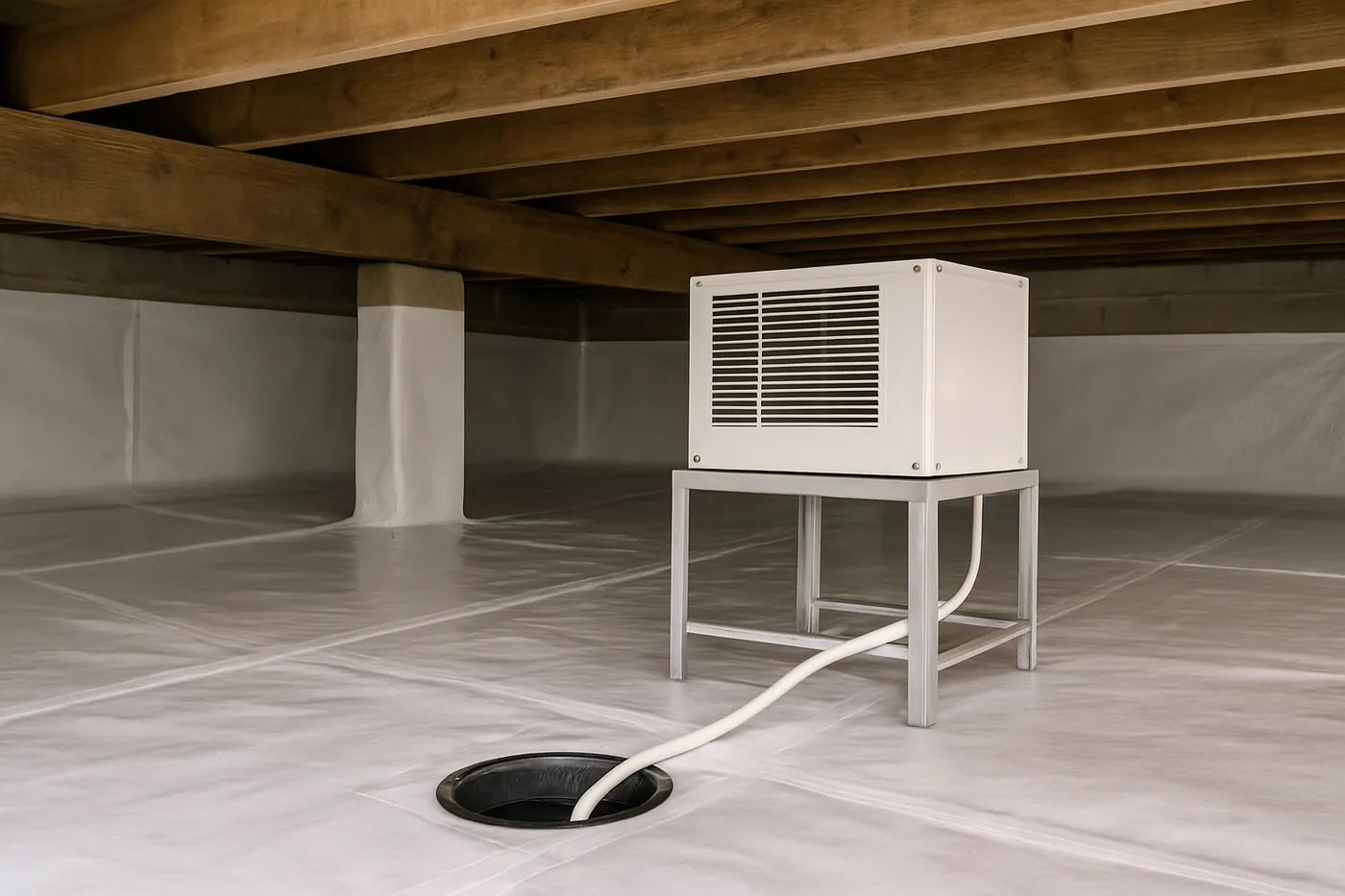
Midlands clay makes the vapor barrier the hardest-working sheet of plastic in the house: ground moisture pushes upward through it season-round, and the clay's expand-contract cycle works its edges and seams every year. Spec answers: Class I reinforced liner (≤0.1 perm), seams overlapped and taped, edges sealed at walls, and piers wrapped so masonry can't wick around the barrier into framing. Detailing decides longevity — a liner laid loose fails at its seams in a couple of clay cycles; one sealed to spec holds its perm rating for decades.
Standalone barriers fit dry, sound crawls at the modest end of the range; barriers inside full encapsulation inherit the sealed-and-dried system. And the standing rule: liquid water first. A barrier over standing water is a pond liner installed upside down — drainage precedes plastic whenever the inspection finds liquid, no exceptions written or otherwise.
Vapor barrier questions, straight answers
What does vapor barrier installation cost in Columbia?
Proper Class I installs run $1,500-$4,000 — reinforced liner across all ground, seams overlapped and taped, piers wrapped, edges sealed to walls. Thin-sheet staple jobs cost less and underperform exactly when Midlands ground vapor tests them.
What makes a barrier 'Class I' and why care?
Permeance — Class I materials essentially stop vapor transmission, which is the whole assignment over Midlands ground. It's also the code language: SC's unvented-crawl provisions specify Class I. A bargain liner that breathes defeats its own purpose at soil level.
Is a barrier alone enough for my crawl?
If the ground is dry and the readings are moderate, a proper ground seal is a legitimate stage one — it stops the soil's vapor contribution cold. Crawls running high RH or taking liquid water need their other stages; the inspection readings sort which crawl you own before anything sells.
What's wrong with the barrier that's already down there?
Usually the install more than the material: gaps at piers, untaped seams, edges stopping short of walls, sections displaced by trades who crawled through. A barrier is a pressure boundary — every gap is a chimney. We photograph what's there and either finish it properly or replace it honestly.
How long does a good barrier last?
Decades — reinforced Class I liners installed with sealed seams outlive roofs. What kills barriers early is traffic and shortcuts: thin material torn by service visits, unwrapped piers wicking around the edges. Buy the install quality once and the material question retires.
Get a free Columbia crawl space inspection
Tell us what you're noticing — smells, humidity, floor bounce, a wet crawl — and we'll schedule an inspection with photos of what we find. We reply the same business day.