
Crawl space moisture control in Columbia runs $1,200–$2,500 installed for crawl-rated dehumidification — sized to the space, drained properly, and commissioned to hold 45–55% RH through a Midlands summer. In this climate the dryer is the sealed system's working partner, not an add-on.
Why Columbia's air demands the mechanical half, sizing done honestly, and the monitoring that keeps everyone honest.
Five saturated months versus your crawl
Columbia's warm season isn't a stretch of humid days; it's a standing condition — months of air near its carrying capacity, pressing at every seam. A sealed crawl stops the bulk import, but moisture still arrives in trickles: vapor at liner margins, the house exhaling downward, every access opened and closed. Mild climates can ignore trickles; this one compounds them into drift. Mechanical drying is how the number holds — which is why South Carolina's unvented-crawl code language pairs the Class I barrier with a drying mechanism. Both halves, on purpose.
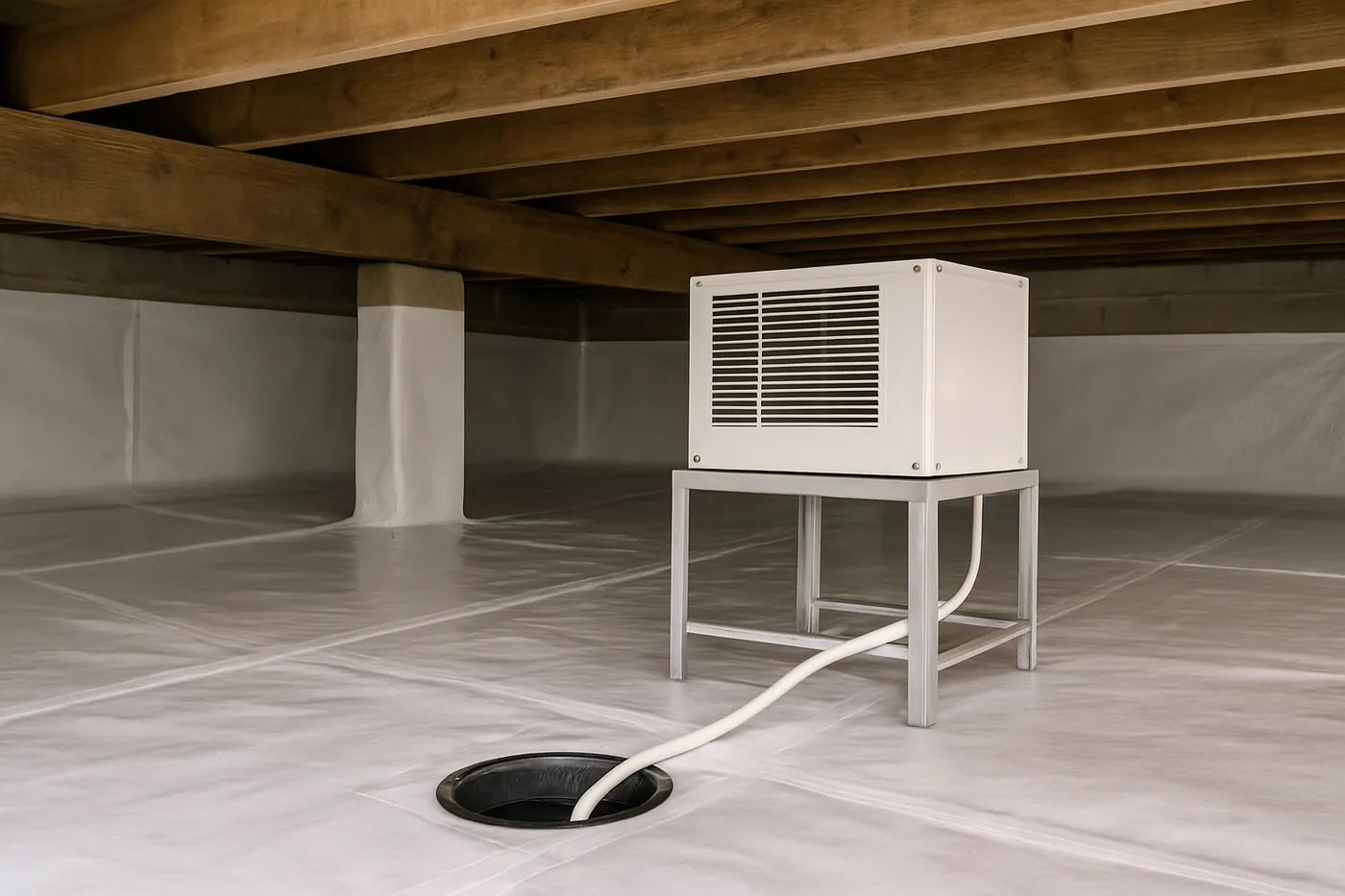
Sized and installed like it matters
- Sized to the real load — footage, height, and measured starting condition; Midlands sizing rounds up because August doesn't negotiate
- Crawl-rated hardware — cool, low, dusty duty for years, not seasons
- Drained, never bucketed — condensate plumbed to drainage or daylight
- Placed for circulation — dead corners are where readings lie
Commissioned on instruments, watched from the couch
Handover is numbers: starting RH documented at inspection, the post-install drop recorded, the humidistat set, and a remote sensor reporting to your phone. From then on your crawl is a number you check, not a space you wonder about — and when the number drifts, the suspect list is short and the fix is usually a filter. Dry, in this town, is a verifiable state.
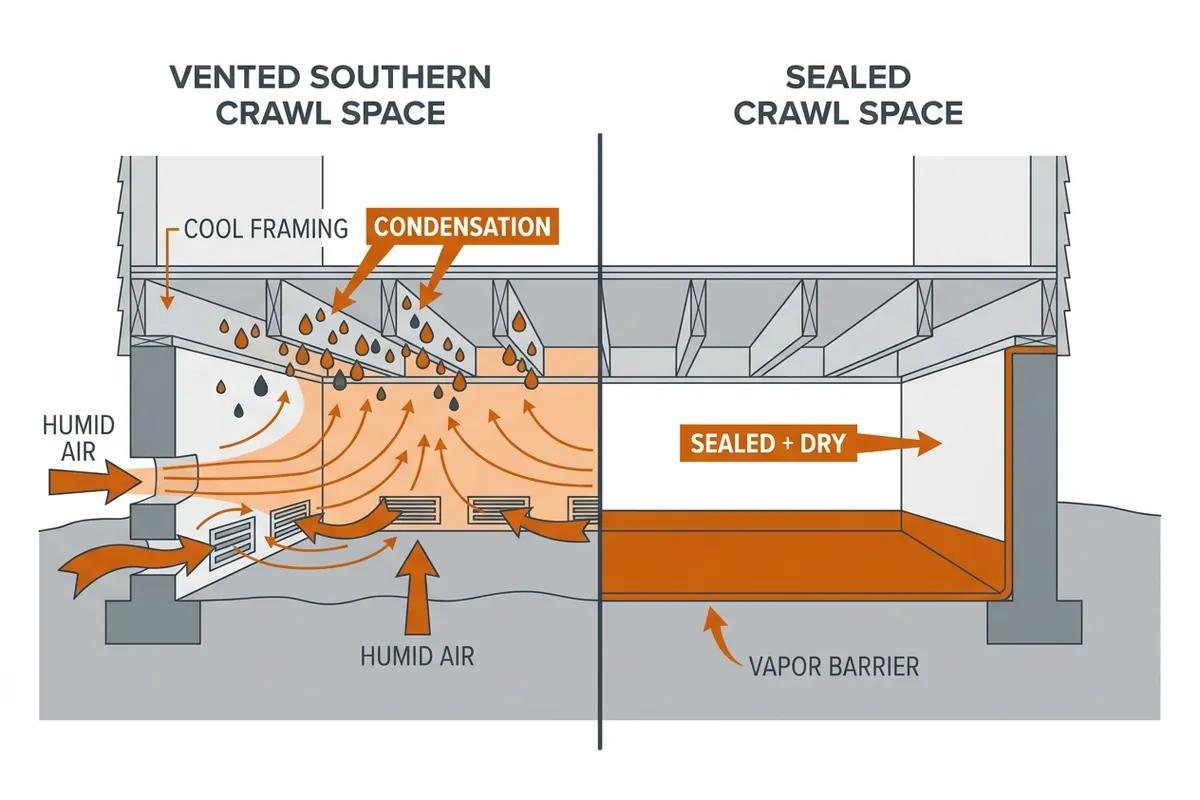
The condensation cycle, managed end to end
Moisture control in a Columbia crawl is supply-line management. The supplies: ground vapor rising off Midlands clay that holds water long after rain; vent air delivering the outdoor summer to your framing; and liquid intrusion where grading or gutters concentrate storms against the foundation. Control means addressing each on its own terms — barrier against the ground, sealing against the air, drainage against the liquid — and then holding the result with a crawl-rated dehumidifier plumbed to drain, targeted to the 45–55% band, and read by a hygrometer placed where the answer is honest.
The sequencing discipline is what makes the spend permanent: drying a crawl that still breathes vent air is renting equipment to fight a climate; sealing one that still takes storm water is wrapping a problem in plastic. The inspection reads which supply lines your crawl actually runs and prices them in order — smallest complete fix first, in writing.
Where is the moisture actually coming from?
Columbia summers sit above 95 degrees with humidity to match, and a vented Midlands crawl holds above 70 percent all season — when the wood under your floor wants 45 to 55. Moisture control is the work of closing that gap in the right order.
| Option | What it means | The Midlands version |
|---|---|---|
| The ground itself | Bare soil evaporates into the crawl continuously | Midlands clay keeps the ground damp under the house through every season |
| The vent openings | Summer air condenses on framing cooler than its dew point | The 95-degree season makes vent air the largest single moisture source here |
| Movement gaps | Shrink-swell clay opens paths that pull humid air in | This clay expands wet and contracts dry — the gaps it opens are supply lines |
| What remains in the air | The part a dehumidifier exists for — after the first three | Only worth buying after the ground is sealed and the vents are closed |
Order is the whole discipline: seal the ground, close the vents, then dry what is left. Run backwards, the dehumidifier fights the whole Midlands summer and loses.
Moisture control questions, straight answers
What does crawl space moisture control cost in Columbia?
Crawl-rated dehumidification runs $1,200-$2,500 installed — sized to your footage and starting condition, plumbed to a condensate drain, commissioned to hold 45-55% RH with a sensor you can read remotely. It's the working half of every sealed system here.
Why isn't the seal alone enough in the Midlands?
Because the air outside spends five months saturated and the house above keeps exhaling downward. Even a good seal admits a trickle at the margins, and Columbia's climate turns trickles into drift — back over 60, then 70, by late summer. Mechanical drying removes the trickle and holds the number. Seal AND dry, by design and by code.
Can a portable dehumidifier from the store handle it?
For a season, at a cost: portables aren't rated for crawl temperatures or duty cycles, need bucket-emptying or improvised drains, and die young down there. Crawl-rated units run cool, drain automatically, and last years. The price difference buys longevity, not a logo.
What number should my crawl hold, and how do I check?
45-55% RH. Checking takes a glance: the unit's humidistat holds the range and a remote sensor reports to your phone. We commission with documented readings so your baseline is real — from there, the crawl is auditable any humid afternoon you're curious.
What if the number starts drifting up?
Drift has a short suspect list: filter, condensate line, a vent or door left open, or — rarely — a seal seam worth re-taping. The sensor catches it early, the fix is usually minutes, and we're a call away when it isn't. Watchable systems stay fixed; that's the point of the instruments.
Get a free Columbia crawl space inspection
Tell us what you're noticing — smells, humidity, floor bounce, a wet crawl — and we'll schedule an inspection with photos of what we find. We reply the same business day.