
Full crawl space encapsulation in Columbia costs $4,000–$14,000: water management where needed, Class I vapor barrier across ground and walls, vents closed, and mechanical drying holding 45–55% RH — the engine-off package for a city whose summers run the condensation engine harder than almost anywhere.
The stages in order, honest tier pricing, and the arithmetic that makes the system defend itself.
Stages, in the order that lasts
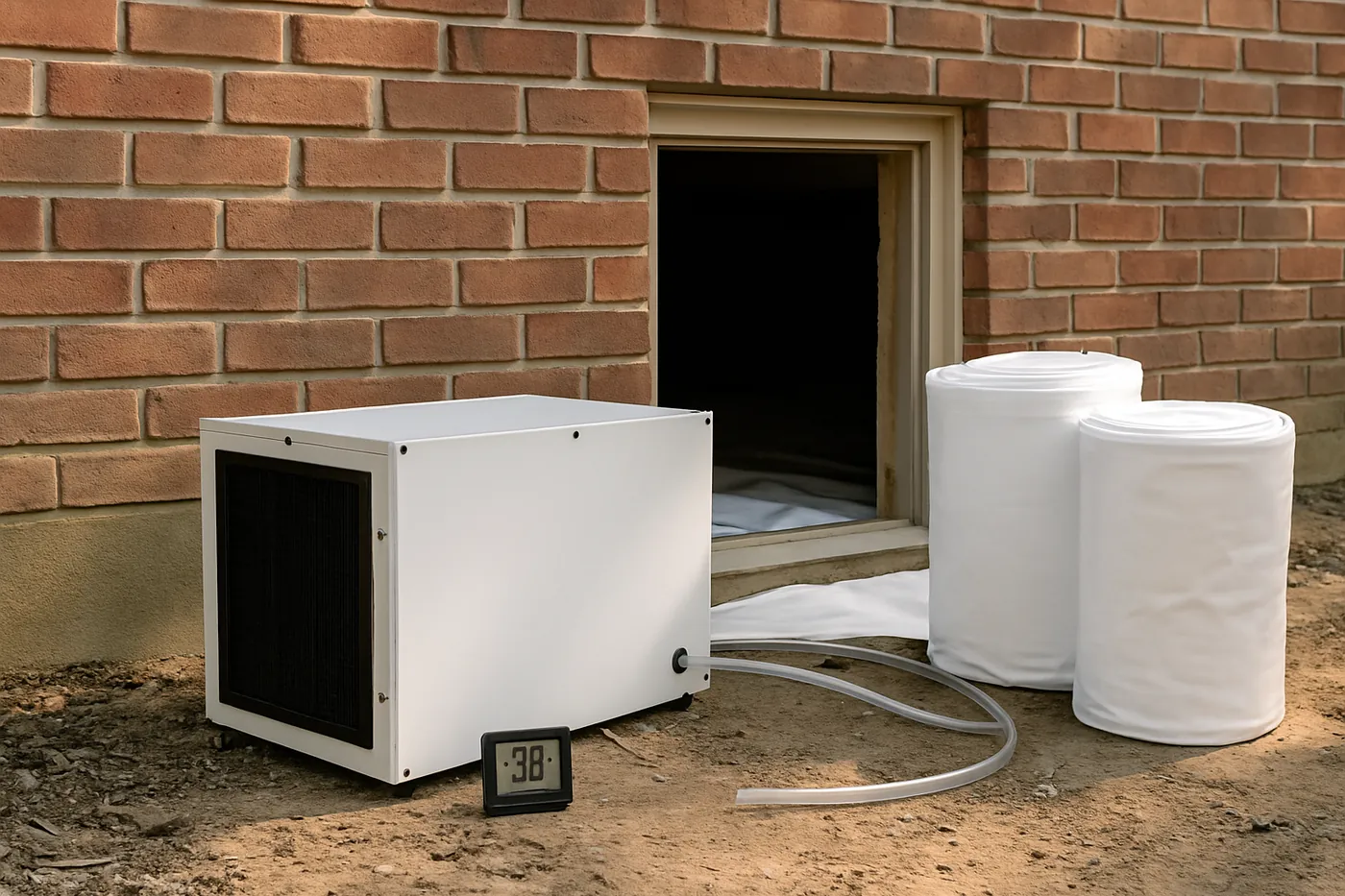
Encapsulation fails as a product and lasts as a sequence. Columbia's order: liquid first — clay-side crawls that take storm water get drainage before anything seals, because a liner over seepage is a pond liner. Wood second — spans the humid years softened get repair while the crawl is open. Seal third — the Class I barrier across ground and walls, piers wrapped, vents closed. Dry always — mechanical drying sized for Midlands air, because a sealed-but-undried crawl in this climate drifts back over the line by July.
Tiers, priced honestly
| Tier | Right when | Range |
|---|---|---|
| Vapor barrier | Dry ground, vapor the only import | $1,500–$4,000 |
| Barrier + drainage | Clay-side seepage or seasonal water | $3,500–$8,000 |
| Full encapsulation | The complete seal-and-dry | $4,000–$14,000 |
| + Structural repair | Softened spans found at inspection | Per written scope |
Every tier ships with photographs and readings — before at inspection, after at commissioning.
The arithmetic that closes the sale honestly
Price the alternative: an AC fighting a wet crawl every summer, framing absorbing toward its repair bill, mold treatment when the biology blooms, and South Carolina's termite pressure browsing a buffet. The sealed system retires all four accounts and then reports its own performance to your phone. Few home systems defend their price with arithmetic this short — which is why we lead with the inspection readings and let them argue.
Sealing against a 95-degree, 70-percent summer
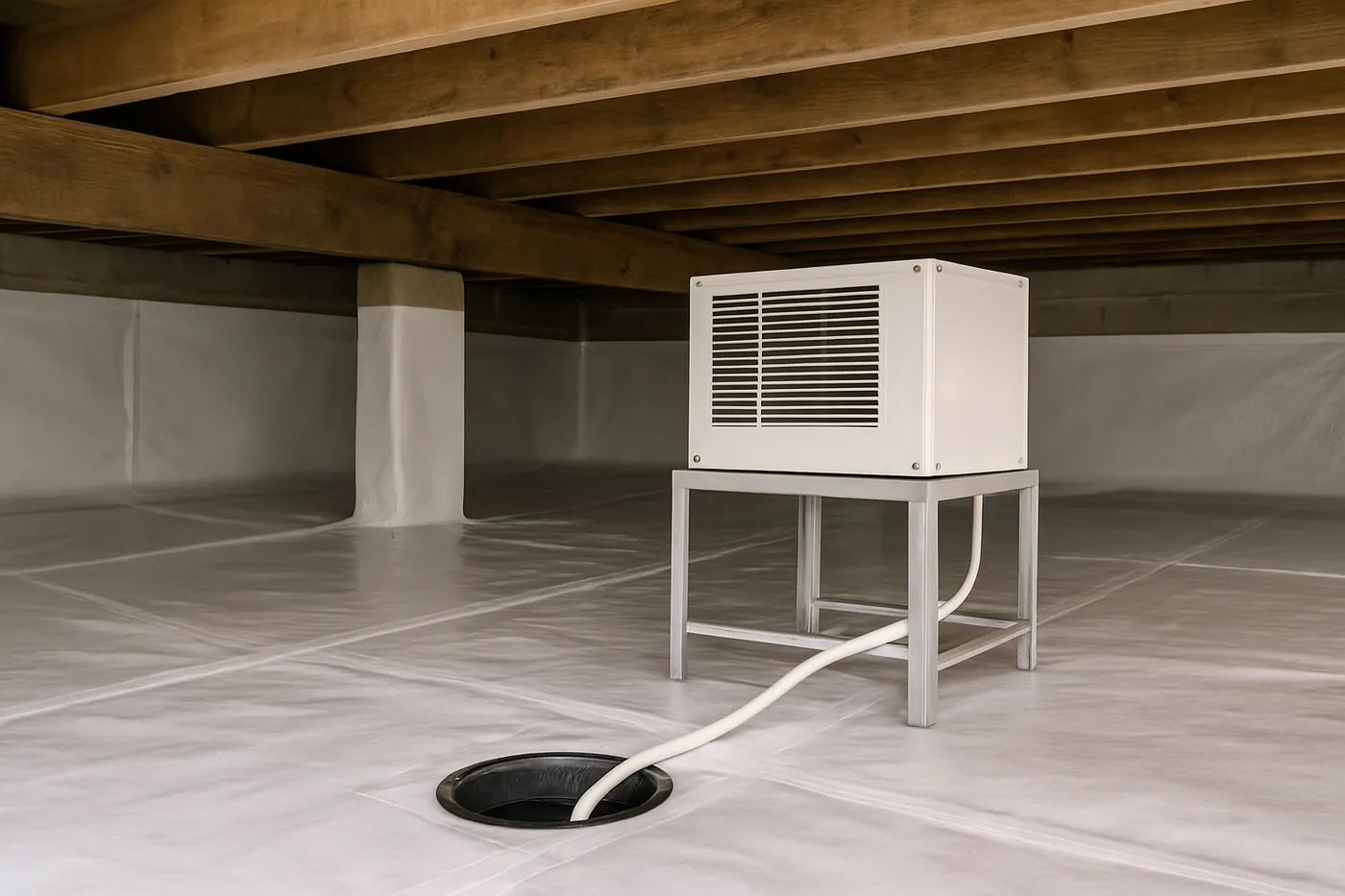
Columbia's encapsulation case is written by its thermometer: summers that regularly clear 95 degrees with humidity to match, and vented crawls that sit above 70% relative humidity all season — twenty points past the 45–55% band where wood stays healthy. The physics is condensation arithmetic: hot saturated outside air pulled through vents meets framing cooled by the conditioned floor above, and the difference precipitates onto your joists daily, all summer. Sealing breaks the arithmetic: Class I liner over ground and piers, vents closed, mechanical drying holding the band. Full encapsulations here run $4,000–$14,000 with crawl size and repair findings setting the position.
The Midlands-clay detail: this soil expands wet and contracts dry, opening seasonal gaps at the foundation line that pull humid air in below grade — which is why sealing detail at the sill and penetrations gets inspected here as carefully as the liner seams, and why our commissioning readings are taken in August terms, not April ones.
Encapsulation questions, straight answers
What's included in a full Columbia encapsulation?
The complete engine-off: water managed first where the clay demands, Class I barrier sealed across ground and up walls with piers wrapped, vents closed permanently, and mechanical drying sized to hold 45-55% RH — commissioned with documented readings. Anything missing a stage is a partial wearing the name.
Where in the $4,000-$14,000 range will my house land?
Square footage anchors it; water and wood move it. Sandhills-side crawls with dry ground and sound framing price low; clay-side crawls carrying storm water add drainage; framing the humid decades softened adds repair. The photographed inspection places yours with readings, not vibes.
Why close vents in a climate this hot?
Because the heat is the problem: every vented hour imports saturated 95-degree air to condense on your cooled framing. Closing vents stops the supply; the code (IRC R408.3 as adopted in SC) explicitly blesses the sealed design with a Class I barrier and drying. Open vents in Columbia are a moisture subscription.
Will sealing help my summer power bill?
It usually eases it: your AC has been dehumidifying the crawl through the floor all summer, and dry air costs less to cool. Comfort improves first, bills follow. We commit to the humidity number — the physics handle the rest.
How do I know it's still working next August?
You'll read it: the system commissions with documented readings, the humidistat holds the range, and a remote sensor reports to your phone. Sealed crawls here aren't faith-based — 45-55% is checkable from the couch.
Get a free Columbia crawl space inspection
Tell us what you're noticing — smells, humidity, floor bounce, a wet crawl — and we'll schedule an inspection with photos of what we find. We reply the same business day.