
Sagging floor repair in Columbia runs $1,500–$8,000 for most crawl space structural work: sistering weakened joists, replacing rot-claimed girder sections, and resetting supports. Midlands crawls run above 70% RH through the long hot season — past the 45–55% healthy standard — and wet wood deflects before it rots.
Why the Midlands season sags floors, what each symptom means, and the repair in order.
The longest wet-wood season in the region
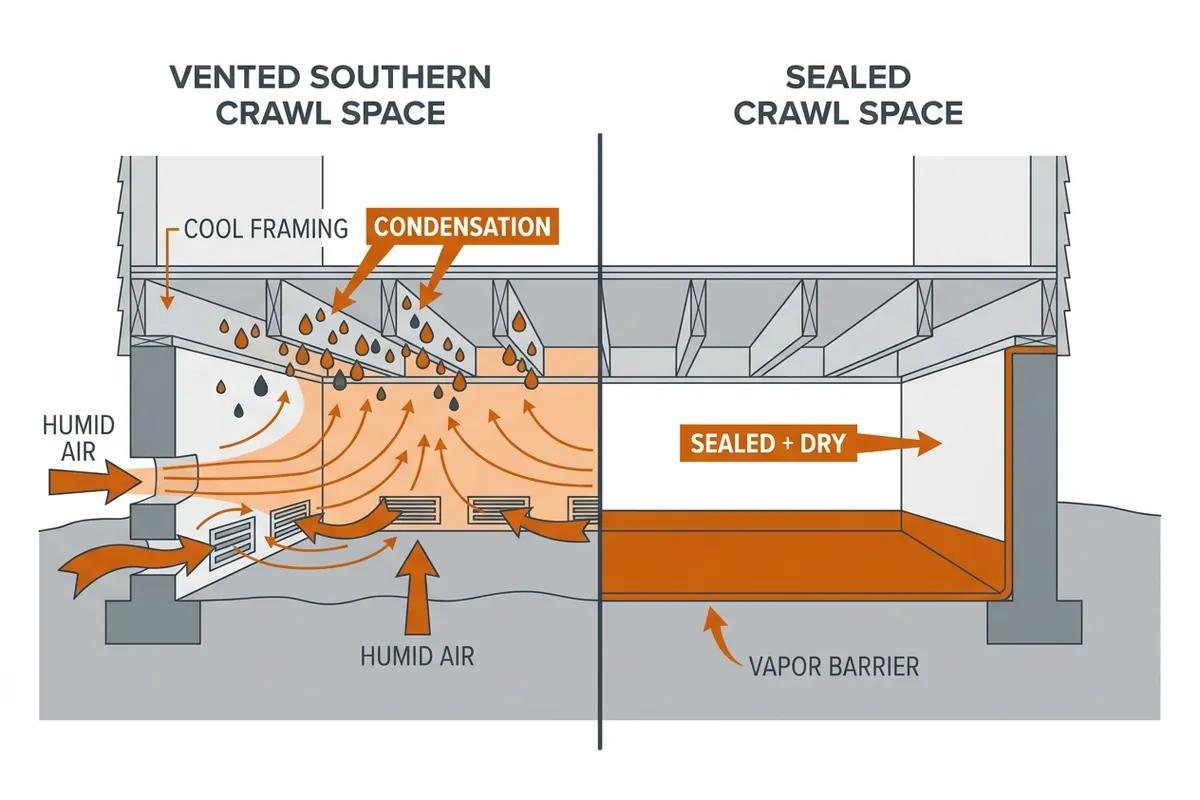
Wood carries load by staying stiff, and stiffness is a dry-wood property. Columbia’s summers — regularly above 95F, humid for months — hold vented crawl spaces above 70% relative humidity through the longest warm season in this fleet’s crawl markets, and the Midlands clay adds its own trick: expanding wet and contracting dry, it opens seasonal gaps at the foundation line that pull still more humid air under the house. Framing that lives in that air absorbs it and softens; joists deflect under loads they once carried easily, girders sag between supports, and the clay walks pier shims as it cycles. The floor above integrates all of it: bounce, slope, baseboard gaps, drifting doors.
Reading the symptoms
| What you notice | What it usually means | The fix |
|---|---|---|
| Bounce in the middle of a room | Joists deflecting — softened or under-sized | Sister or reinforce the run |
| Slope toward one area | A girder sagging or a support settled | Girder repair; supports reset on proper footings |
| Gaps under baseboards | Perimeter holding, floor field dropping | Span-by-span survey, then targeted support |
| Soft spots underfoot | Subfloor or joist rot — past stiffness loss | Replacement — rot doesn’t repair |
| Doors drifting seasonally | Clay cycling pier footings | Footing correction plus moisture control |
The repair, in the order that holds
Measurement first: the laser survey upstairs maps which spans dropped and how far; the crawl-under with a moisture meter says why — wet wood, rot, walked shims, or the improvised jacks a previous decade left. Then the carpentry: sistering where wood weakened, replacement where rot claimed sections, engineered supports on footings sized for cycling clay. Then the fix that makes it permanent — the moisture work, because new lumber in the same 70% air starts the same clock: waterproofing where water arrives, a sealed vapor barrier on the ground, and moisture control against the season itself, with full encapsulation as the honest endpoint for the worst spaces. Broader structural context is on the crawl space repair page; every price is in the cost guide.
What to expect after the repair
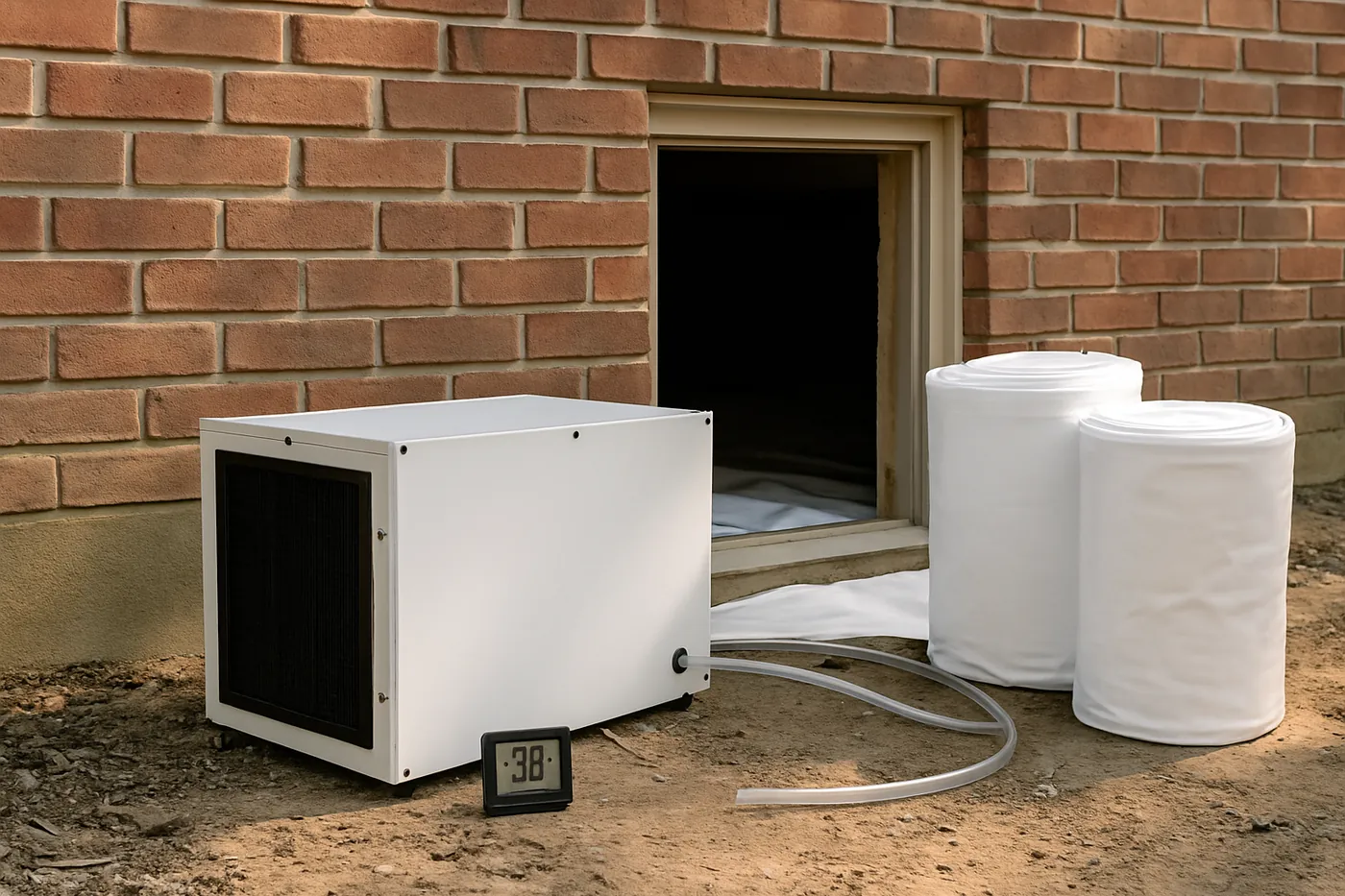
A repaired floor comes back within tolerance, not to showroom flat. Some deflection usually stays by design, because forcing an old floor perfectly level cracks the finishes above it. Lift is done gradually for that reason, so plan on adjusting a few doors afterward and seeing a hairline crack or two as the frame settles into its new position — wait a season before patching and you patch once. Then protect what actually holds the repair: the framing stays stiff only while the crawl stays dry. Leave a hygrometer under there, and treat a summer reading that climbs past the 55% range as the early warning it is, well before Midlands humidity gets back to work on the wood.
Sagging floor questions, straight answers
Why do Columbia floors over crawl spaces sag?
The longest wet-wood season in the region. Midlands summers run past 95F with vented crawls above 70% relative humidity — well past the 45-55% healthy standard — and framing that spends months absorbing that air loses stiffness before rot ever shows. Joists deflect, girders sag, and the floor above reports it as bounce and slope.
Is a bouncy floor structural or just an old-house quirk?
Measurable, either way. Bounce means framing is deflecting under load — sometimes within tolerance for a long span, often because months above the moisture threshold have softened the wood or a support has settled into the clay. A laser survey upstairs and a moisture meter below turn the quirk into numbers before anyone prices anything.
What does the repair actually involve?
Match the fix to the failure: sistering joists the humidity has weakened, replacing girder sections rot has claimed, resetting supports where Midlands clay movement walked them, and adding engineered supports where spans were always optimistic. Then the moisture fix that made it necessary — dry framing is what keeps the repair.
Can I just put a jack under the low spot?
That's how crawl spaces fill with improvisations. A jack under the visible sag moves deflection to the next weak point and puts a point load on clay that swells and shrinks with the seasons. Proper supports bear on footings sized for this soil, placed where the span math says — not where the bounce is loudest.
What does sagging floor repair cost in Columbia?
Most structural crawl space repairs run $1,500-$8,000 — driven by joist and girder count, supports added or reset, and access. The humidity correction that stops recurrence prices in the same written scope, because new lumber in 70%-plus air starts the same clock. The crawl-under inspection with photos is free.
Get a free Columbia crawl space inspection
Tell us what you're noticing — smells, humidity, floor bounce, a wet crawl — and we'll schedule an inspection with photos of what we find. We reply the same business day.